

Many people love animals, and some of us make the ethical decision not to eat meat or other animal foods.
That is absolutely fine and as someone who cares about animal welfare, it’s definitely something I can respect.
While I personally don’t think a vegan diet is optimal for me, I recognize that with careful formulation it is possible to be healthy on a vegan diet.
In truth, humans around the world have demonstrated good health on a variety of different diets – the main key tends to be a dietary pattern based around whole foods (rather than ultra-processed foods).
So, this article is not an attack on veganism—which is a personal choice—but it is a criticism of scaremongering claims and mistruths.
Unfortunately, such claims are quite common, and people may refer to them as ‘vegan propaganda’.
Dietary Dogma is the Wrong Way Forward
Firstly, ‘dietary dogma’ works both ways.
Many people want—or need—to believe that their exact dietary choice is the best way of eating for everyone.
Some of these people are on vegan diets, others are on ketogenic/paleo diets or a wealth of other dietary systems.
The truth is that no – being a vegan does not mean you are immune to developing disease, and nor does following any other diet.
Sadly, these kinds of statements are very common in the online space, and frankly, they are junk science.
Yes, a well-formulated dietary pattern may potentially help protect against various diseases, but it doesn’t make someone bulletproof.
What is Vegan Propaganda?
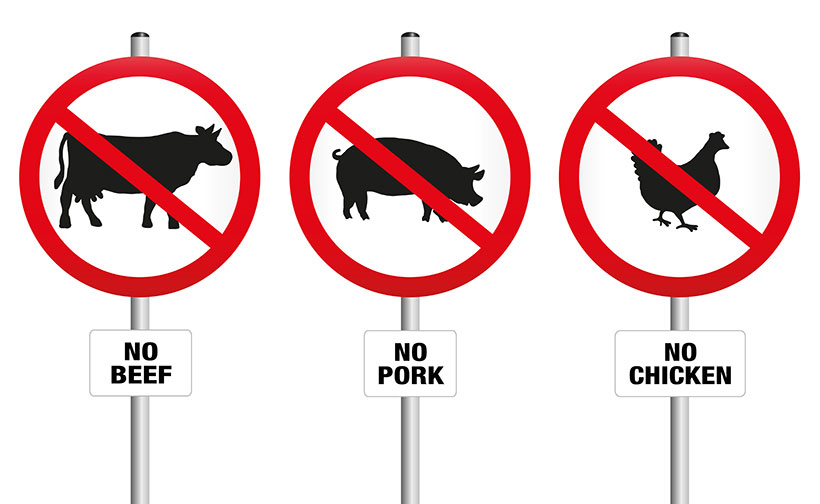
Leaving our personal dietary beliefs at the door, vegan propaganda is not individuals or organizations who write about the vegan diet.
There are a lot of unhealthy food products around, and those who discuss making a vegan diet as healthy as possible are helping the many people who choose to be vegan. Providing the information is accurate, they are doing a great job.
All they are doing is following their beliefs and trying to help others who believe in the same things.
However, the complete criticism of any other dietary system, and large marketing campaigns to try to convince people that only veganism can be healthy?
Yes, that is a kind of propaganda.
Spending large amounts of money to promote the message that animal foods cause disease, using cherry-picked and one-sided studies?
That is blatant propaganda too.
Animal advocacy groups like People For the Ethical Treatment of Animals (PETA) and the Physicians Committee for Responsible Medicine (PCRM) are often responsible for such claims.
These organizations may do some admirable work relating to animal cruelty, but they appear to have a political agenda rather than taking an equal, non-biased and evidence-based position on meat and nutrition.
Moving on, let’s look at some of the propaganda-style claims we hear from vegans in a bit more detail.
Claim 1: Meat “Causes” Disease
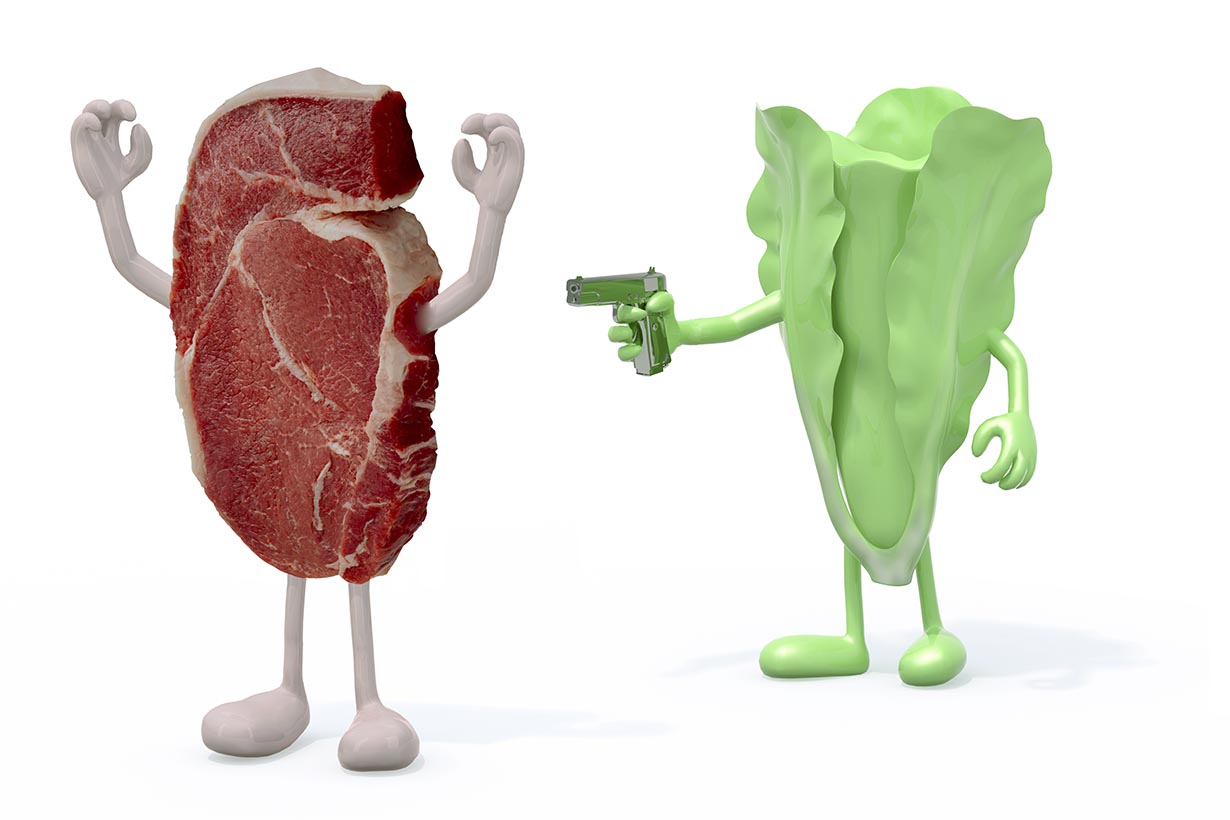
There are various epidemiological studies showing that high intakes of red meat lead to a slightly higher rate of heart disease (1, 2).
As a result, some promote claims that “red meat causes heart disease” in any amounts.
First of all, correlation does not equal proof of causation. Secondly, higher heart disease rates in red meat eaters may be a genuine concern, or it may be influenced by other factors – such as unhealthy habits and dietary patterns.
One reason why is that these studies rarely differentiate between meat that is part of a processed food meal and meat as part of a home-cooked meal. Given that approximately 57.9% of calories in the US diet come from ultra-processed food, it’s safe to say that a fair proportion of red meat is eaten alongside some fries and cola.
But what about the “dangers” for those who eat a portion or two of unprocessed, fresh meat alongside a plate of vegetables each week?
Well, there are no studies that can account for this in a completely accurate way.
What Does Research Show?
Researchers do try to account for confounding variables such as ‘diet quality’ as best as they can.
For example, food frequency questionnaires used in observational studies will typically calculate how much fruit/vegetables, sodium, red meat (etc) each individual eats as a marker of diet quality.
Further, quite a number of studies on high intakes of red meat have found that it was associated with a higher risk of colorectal cancer and cardiovascular disease. You can read more about that here.
On the other hand, a recent meta-analysis of 24 short-term RCTs investigated how red meat affects lipid levels and cardiovascular risk factors.
The findings? Red meat had a neutral impact on cardiovascular risk factors, and consuming more than 0.5 serving on average per day versus no red meat or lower amounts had little effect.
In fact, among the participants, LDL cholesterol, triglycerides and the total cholesterol-HDL ratio dropped over time (3).
Could consuming large amounts of red meat on a daily basis have different results from this? Of course, but this just shows that, as a blanket claim, saying “red meat causes disease” is misleading.
Can red meat be harmful? That likely depends on precisely what an individual is eating, how much, the accompanying foods, and all this will then be influenced by the overall dietary pattern, individual factors, and more.
But does meat clearly “cause” disease in any amounts?
Only according to vegan propaganda.
Claim 2: Broccoli Has More Protein Per Calorie Than Beef
The claim that various vegetables—usually broccoli—have more protein than meat is designed to show that protein from meat is not necessary.
But is this common vegan claim actually true?
Beef Skirt Steaks Per 100g (4)
- Calories: 205
- Protein: 26.7g
This works out to 0.13 grams of protein per calorie.
Broccoli Per 100g (5)
- Calories: 34
- Protein: 2.8g
Broccoli has 0.082 grams of protein per calorie.
No, Vegetables Do Not Contain More Protein Than Meat
The reasonably fatty cut of beef above contains more protein than broccoli per calorie (and a lot more per gram).
Lean beef would contain a lot more protein per calorie, and a really fatty steak might contain a similar amount.
However, to get the same amount of protein as 100g of meat, you would need to eat well over 1kg of broccoli.
This is neither cost-effective nor realistic and probably not so great for the gut.
Lastly, a vegetable source of protein (alone) is not a complete source of protein while meat is.
Claim 3: Apes Don’t Eat Meat – So Humans Shouldn’t Either

There are claims that because humans and our primate relatives are closely related, we shouldn’t eat meat.
This basically stems from the fact that apes don’t develop the same diseases as humans.
There are two interesting points on this issue;
1) Some Wild Apes DO Eat Meat
Various wild apes do eat meat, this can either be because they have a taste for it, or an opportunistic strike when feeling hungry.
You only need to search or look at Youtube (caution advised) to see how carnivorous some of these primates are.
2) Wild Chimpanzees and Gorillas Don’t Develop Atherosclerosis, But Captive Ones Do
Chimpanzees very rarely develop coronary atherosclerosis in the wild, a disease that is now an epidemic in humans.
However, it is interesting to note that heart disease is now the predominant cause of death in captive chimpanzees (6, 7).
These animals generally feed on a diet full of fortified processed food, alongside plenty of fruits and vegetables.
So, if it isn’t meat causing captive chimps to develop heart disease, what is?
Case Western Reserve University took a long look at this issue in relation to Western lowland gorillas in US zoos.
Heart disease is the biggest killer of these animals, so researchers decided to test a new dietary regime at Cleveland Metroparks Zoo.
As part of this, the high-glycemic and highly-processed diet of the gorillas was replaced by a diet of beans, seeds, and greens.
The result?
The gorillas lost a lot of weight—65lbs in a year—despite their new diet being higher in calories (8).
In other words, once the gorillas came off the diet high in processed food, their health improved.
Both of these diets were vegan with one difference; one was full of processed food and the other wasn’t.
The lesson: excessive amounts of ultra-processed foods are best avoided, whether they are meat-based or plant-based.
Likewise, cutting out processed food would improve the health of most humans too – no matter what their preferred diet is.
You can see a short video on this research here;
Claim 4 – Meat is Bad – and Vegan Products Are Healthier
Admittedly, this claim is not pushed by health-conscious vegans.
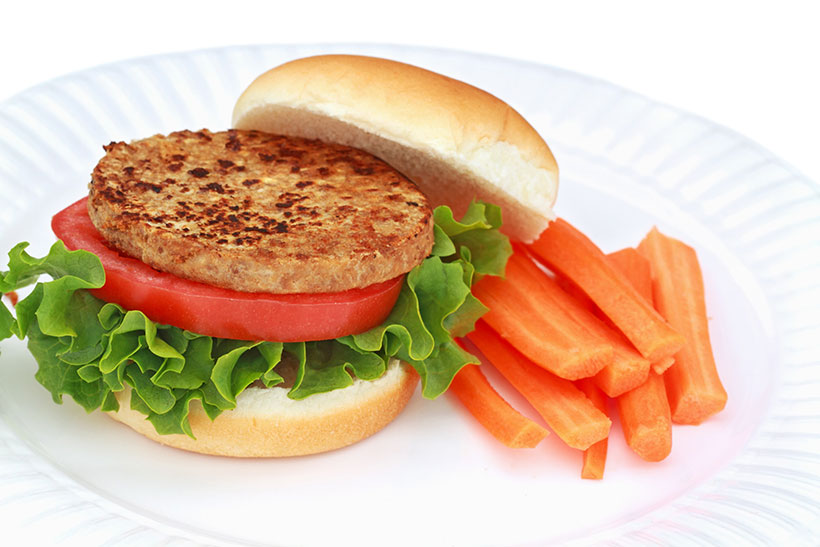
However, it is easy to see vegan propaganda and marketing claims that “plant-based meat substitutes” are better for us than real meat.
It is also interesting that many of these claims focus on the saturated fat content of (fatty) meat because many substitute products are also high in a source of saturated fat called palm oil.
The main point here: “plant-based” doesn’t always make something healthy, and printing “made from 100% plants” on the packaging does nothing to change that.
Many plant-based meat substitutes offer vegans and vegetarians a meat-like experience, which many will appreciate. However, they are not always the healthiest choices. Whole plant foods, such as lentils, beans, and products like tofu and tempeh, tend to be better options.
Whether you’re a meat eater or a vegan, whole foods usually win.
Scaremongering About Meat and Eggs

Different people have arguments both for and against veganism, covering ethical considerations, health and more.
But there is absolutely no evidence that well-planned vegan diets are better than well-planned omnivorous diets.
Further, there is more chance they can be harmful if not carefully formulated to prevent nutrient deficiencies.
I realize that many people who spread these vegan messages are extremely passionate about their cause and love animals.
But at the end of the day, their biggest concern/focus should be on animal cruelty.
Most people are not inhumane and care deeply about animal welfare. However, scaremongering that meat and eggs will kill you and cause harm in any amounts is just baseless propaganda.
Animal Welfare is Important

The idea of an animal being slaughtered for food is never nice.
Neither is a lion catching a zebra in the African plains, or a desperate fish struggling to get away from a predator.
But the food chain is a fact of life, and many animals eat other animals.
What should never be tolerated is cruelty to animals.
Admittedly, there are big problems with the commercial meat industry and animal welfare needs improving across the board.
However, I believe there’s a much better chance of doing this if animal rights campaigners focus on the facts about animal welfare.
People care a lot more about animals than they do about misguided health claims.
More Meat Articles