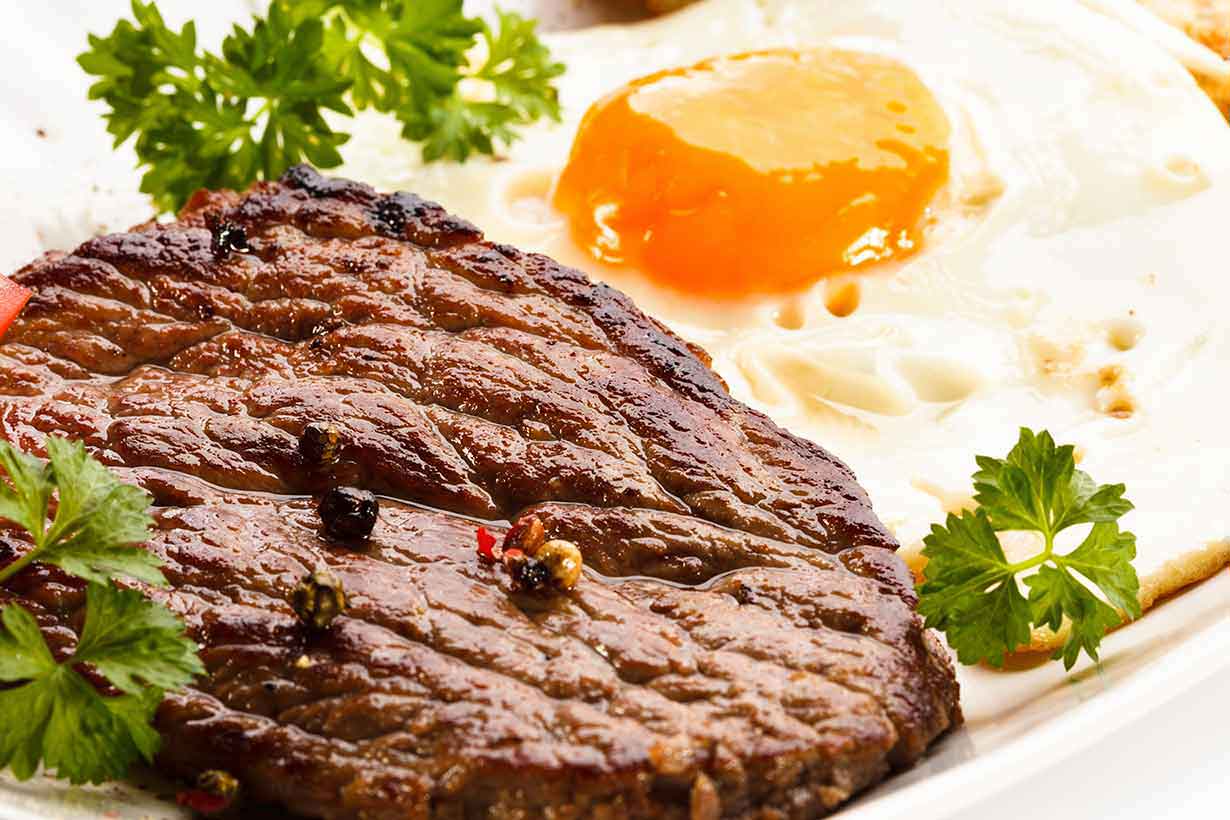
Many people love animals and choose to live a vegan lifestyle, making the ethical decision not to eat meat and animal-based foods. This is a completely understandable personal choice.
Likewise, many people eat typical omnivorous diets and value the inclusion of meat in their diets for its broad nutrient composition. Once again, this is an understandable personal choice.
However, a significant amount of what some may call ‘vegan propaganda’ and ‘meat propaganda’ has entered popular media.
This information is often designed to push one of two contrasting messages:
- That being vegan is best for everyone for health reasons
- That meat is essential for everyone, and that nutrients from plants aren’t as beneficial
Each of these arguments often takes elements of truth and wrap them up with myths to make an emotive argument. While we understand ethical arguments and personal dietary decisions, this article focuses on this ‘propaganda’ solely relating to exaggerated claims about health effects. In the article, we attempt to debunk these common myths.
Table of contents
Myth 1: “Animal-Based Foods Are Bad For You”
You may have noticed some vegan claims on social media about all animal foods being bad for you, or exaggerated headlines about the “dangers of meat.”
Firstly, it is true that certain types of meat, such as red meat and processed meat, have been associated with an increased risk of cancer, as per a recent 2025 systematic review.
Systematic reviews of observational studies have also shown that high intakes of red meat may increase the risk of cardiovascular heart disease. However, these are associations rather than confirmed effects, and factors like dose and the overall diet need consideration.
Additionally, it is important to note that there are many different types of animal-based foods, and some of them are associated with beneficial health outcomes. For example, a 2023 systematic review found that eating the recommended two servings of fish per week was associated with a 10% reduced risk of cardiovascular outcomes.
Likewise, fermented dairy foods, such as yogurt, have been associated with positive health outcomes by large reviews of the existing evidence. For example, a 2022 systematic review found that consuming high amounts of yogurt was associated with a 7% reduced risk of all-cause mortality compared to low intake.
The Truth
It is true that a large number of studies have found associations between red meat intake and a higher risk of colorectal cancer and cardiovascular disease. You can read more about that here.
However, it is completely inaccurate to imply that all animal-based foods are “bad” for you, and the evidence does not support such statements.
Additionally, removing all animal-based foods from the diet raises the risk for nutrient inadequacy if plant-based diets are not carefully formulated to prevent nutrient deficiencies.
Myth 2: “Plant-Based Foods Are a Poor Source of Vitamin A”
“Propaganda” doesn’t only come from passionate vegan and plant-based dieters, and you can also encounter claims exaggerating the benefits of animal-based foods. This often comes at the expense of plant-based options, with people implying they have poor nutrient bioavailability.
For example, you may have come across claims where people promote organ meats, such as liver, as the best dietary sources of vitamin A because they contain preformed and highly bioavailable vitamin A in the form of retinol.
While that may be true, these claims often portray plant-based foods, which contain provitamin A carotenoids, as “poor sources” of vitamin A, which just isn’t true.
The Truth
Foods high in provitamin A carotenoids include vegetables like:
- Carrots
- Green leafy vegetables
- Pumpkin
- Sweet potato
As we discussed earlier, false claims about food often take an element of truth and exaggerate it, and this is the case here.
What’s true is that the body has to convert carotenoids into vitamin A, and the efficacy of this process and the actual conversion rate can be low. For this reason, animal-based sources of retinol (preformed vitamin A), such as liver, eggs, and oily fish, are the most bioavailable sources.
However, what is usually missing from such claims is the recognition of the significant total amounts of carotenoids that these foods contain. As a result, they typically still provide a very good amount of vitamin A even considering low conversion rates.
To try to account for their lower bioavailability, the United States Institute of Medicine (IOM) set up a metric called ‘retinol activity equivalents’ (RAE) to more accurately measure the amount of vitamin A in plant-based foods.
In their retinol equivalent amounts, here is the amounts of vitamin A in some common vegetables per 100 grams (cooked weight):
- Carrots: 852 mcg RAE (95% of the daily value)
- Pumpkin: 288 mcg RAE (32% DV)
- Spinach: 524 mcg RAE (58% DV)
- Sweet potato: 961 mcg RAE (107% DV)
Controlled trials have also shown that sweet potato interventions can significantly increase vitamin A intake and improve vitamin A status.
Nutritionist’s Note
In this section, we mentioned that the conversion rate of carotenoids to vitamin A is generally poor.
However, one easy way of improving this conversion rate is to consume carotenoid sources alongside a source of fat. The reason for this is because vitamin A carotenoids are fat-soluble, meaning your body can absorb them better when consumed alongside fat.
This could mean anything from carrots stir-fried in oil, a handful of nuts after a sweet potato, or some leafy greens alongside a portion of oily fish like salmon.
Another point to consider is that individuals with a BCO1 gene mutation may absorb lower amounts of vitamin A from carotenoids than individuals without this mutation. Strict vegans with low vitamin A levels may wish to consult their healthcare provider for more information about this.
Myth 3: “Vegan Alternatives Are Healthier Than Meat”
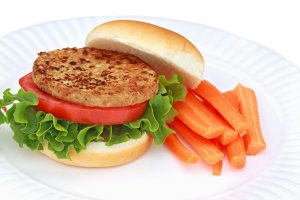
It isn’t overly difficult to see marketing claims and social media posts about “plant-based meat substitutes” being better for us than real meat. However, such claims are hard to substantiate and require a lot of context to evaluate:
- Saturated fat: Generally speaking, red meat is typically higher in saturated fat than meat alternatives, and high intakes of saturated fat can raise LDL cholesterol (also sometimes referred to as “bad” cholesterol). However, some plant-based meat alternatives can be high in saturated fat from ingredients like coconut oil and palm oil.
- High sodium content: Many plant-based meat alternatives contain added salt, potentially making them higher in sodium than unprocessed meat.
- Heme iron: Plant-based meat alternatives typically don’t contain heme iron, which is present at high levels in red meat. Heme iron has been linked to the associations between red meat and increased cancer risk due to its potential to support the formation of nitrosamine, a potential carcinogen.
- Essential nutrient provision: Plant-based meat alternatives may be missing several key essential nutrients present in meat, including iron, zinc, and vitamin B12. If replacing meat without an adequate provision of these nutrients elsewhere in the diet, a plant-based alternative could be a net negative for meeting essential nutrient needs.
The Truth
Claims about foods being a ‘healthier alternative’ require nuance as they are complicated to evaluate.
Depending on the individual, the specific food, and the overall diet someone is consuming, meat may be a better choice for some individuals while a plant-based option may be better for others.
Additionally, it is always a good idea to be wary of label claims, and “plant-based” doesn’t indicate that a food product is a healthy choice. It is likely that whole and less refined plant foods, such as lentils, beans, tempeh, and tofu, are better options nutritionally.
Many plant-based meat substitutes offer vegans and vegetarians a meat-like experience. However, the market is not necessarily aimed at what is best for consumer health, and it is also volatile, with high-profile products, such as the Awesome Burger, frequently being discontinued.
Whole plant foods, such as lentils, beans, and products like tofu and tempeh, tend to be better options nutritionally than products designed to emulate meat.
Myth 4: “Plants Are a Poor Source of Protein”
You may know that meat provides a complete source of protein, being highly bioavailable due to its content of all nine essential amino acids.
Scientific research has also shown that animal proteins have a higher Digestible Indispensable Amino Acid Score (DIAAS) than sources of plant-based proteins.
For these reasons, some meat advocates claim that plants are a poor protein source relative to meat.
The Truth
Firstly, it is true that animal-based proteins are typically better digested than plant-based proteins. In this context, consuming 100 grams of protein from animal-based foods may provide higher quality protein than 100 grams solely from plant-based foods.
However, this doesn’t mean that we can’t get enough protein from plant-based foods:
- Omnivorous diets: In a typical omnivore diet, plant-based proteins from foods like legumes and tofu can provide valuable additional protein to high-quality animal-based proteins.
- Vegan diets: Even in strict vegan diets, it is possible to get sufficient protein from plant foods. The key is to focus on foods with a high protein-density, which means a high protein content relative to the amount of calories in the food. Some good examples here are plant-based protein powders like soy protein, extra firm tofu, tempeh, and seitan.
Total Protein Intake and Protein Quality
While debates over protein quality continue, research has indicated that it may be the absolute protein intake and choosing high-quality sources that matters most.
For example, a 2021 clinical trial had 38 men follow a supervised 12-week resistance program and consume 1.6 grams of protein per kilogram of body weight. 19 men followed a vegan diet plus soy protein supplementation, and 19 followed an omnivore diet plus whey protein supplementation. After 12 weeks, there were no differences in muscle and strength gain between the two groups.
A 2025 systematic review of 30 randomized controlled trials also made several relevant findings:
- Strength and physical performance: No significant differences were noted in strength or physical performance between animal and plant protein intake.
- Muscle mass: Animal protein intake did result in more muscle mass compared to non-soy plant protein in general. However, an explanation for this effect could be that most animal proteins are high-quality proteins containing a wide range of amino acids, whereas most plant proteins (e.g. grains and potatoes) are not. When comparing high quality animal protein (milk) to high quality plant protein (soy), the study found no difference in effect.
Nutritionist’s Note
It is worth noting that research has indicated that vegans typically consume less protein than omnivores. Furthermore, transitioning to a plant-based diet is associated with a lower protein intake.
However, this doesn’t mean plants can’t provide enough protein; it is a matter of diet formulation, underlining the importance of sufficient dietary protein and knowing how to get enough of it.
Myth 5: “Broccoli Has More Protein Than Beef”
You may have seen those viral infographics floating around social media claiming that broccoli has more protein than beef. But is there any truth to this rather unusual looking claim?
The answer? Not really.
The Truth
Let’s look at how much protein you actually get in beef per 100 grams and per 100 calories.
- Protein in beef: According to the USDA’s FoodData Central database, 100 grams of cooked ground beef (20% fat) contains 254 calories and 25.2 grams of protein. This is equal to 9.9 grams of protein per 100 calories.
- Protein in broccoli: USDA data shows that 100 grams of cooked broccoli contains 35 calories and 2.38 grams of protein. This is equal to 6.8 grams of protein per 100 calories.
Notably, to equal the amount of protein in 100g of cooked ground beef, you’d need to consume over 1 kilogram of cooked broccoli. Nobody realistically eats such large servings of broccoli, and claims that broccoli is just as good a protein source as beef are not factual.
The above example would be even more conclusive if we had chosen to use lean meat as the comparator rather than 20% fat ground beef. It also doesn’t take protein quality into account, with beef being a much more complete protein than broccoli.
In short: There are plenty of great plant proteins, but broccoli and other vegetables certainly aren’t a match for meat.
Summary: Dietary Dogma is the Wrong Way Forward
Understanding vegan or meat propaganda requires understanding human behavior.
People find a diet or lifestyle that really works for them, which often makes them passionate about their choices, particularly if their past lifestyle didn’t work for them. This is understandable.
When we find something that works for us in such a way, we are often passionate about our choice being the “best,” and many people are understandably enthusiastic about sharing this message with others.
However, as always in nutrition, there is no one-size-fits-all diet; what works for one person may not work for another. For this reason, pushing the idea of a specific diet being the “best” for everyone is dogma rather than science.
While a well-formulated dietary pattern may potentially help support good health, there are no guarantees. Furthermore, almost all popular diets can have both benefits and drawbacks.
In short, people can live a healthy life on a vegan diet, and they can live a healthy life following a diet that incorporates meat. Messages that strongly argue otherwise are not supported by science, and are often propaganda rather than fact.
More Meat Articles