Low-carb diets have been a popular option over recent years, but they can be quite restrictive in what they exclude from the diet.
While there are many different low-carb recipes for traditional foods, they tend to exclude high-carbohydrate ingredients like wheat flour.
Since wheat flour is a primary ingredient in the American classic meatloaf, does this mean that traditional meatloaf is off the menu too? It doesn’t have to be.
In this article, we look at some ingredient and binder options that can make meatloaf low-carb-friendly, as well as additional ingredients that can enhance the flavor or upgrade the nutrient content.
We’ll start by looking at the meat choices, before moving on to binders, flavor enhancers, and additional fat options.
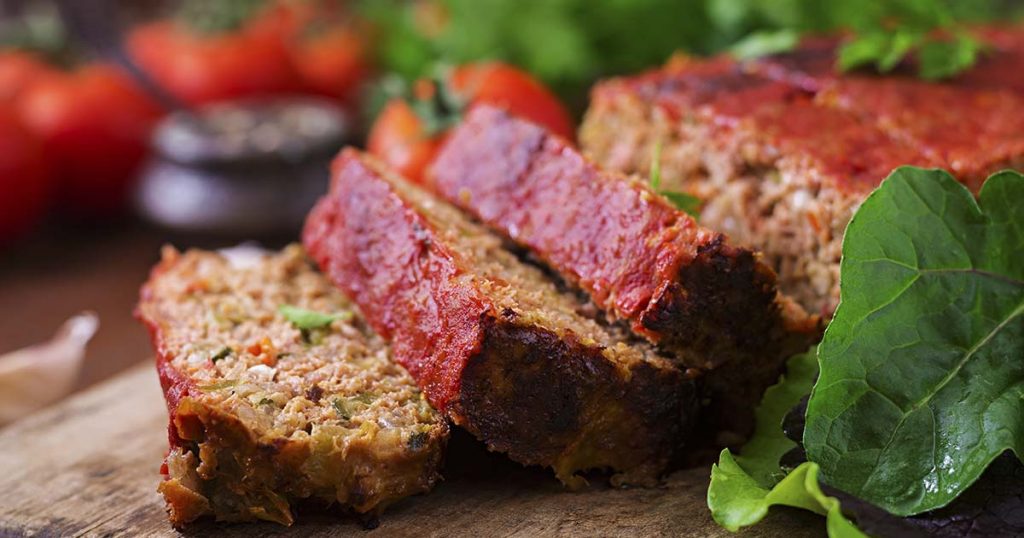
Table of contents
1. Choosing the Meat
Firstly, other than the binding ingredients that hold it together, meat is the most important ingredient in meatloaf. While the traditional option is ground beef, it doesn’t have to be.
Here are some options that you could choose:
- Ground beef: Provides the familiar taste and consistency of traditional meatloaf. However, higher-fat varieties of ground beef can be quite high in saturated fat.
- Ground pork: While it tastes slightly different, ground pork has a similar consistency and basic nutritional profile to ground beef.
- Lean ground meat: Opting for a 5% fat (or lower) ground beef or pork product can significantly decrease the saturated fat content of meatloaf. A reduced intake of saturated fat may help to lower “bad” LDL cholesterol levels.
- Ground chicken: If you’re wanting a traditional meatloaf, chicken probably isn’t the right ingredient. However, it’s a rich source of protein and typically has fat levels similar to lean meat.
- Ground turkey: Similar to ground chicken, turkey isn’t really the ingredient for a traditional meatloaf. But it works and offers its own flavor, and it is another leaner option.
- Vegan options: For those who follow vegan or plant-based diets, it’s even possible to make a low-carb meatloaf. While meatloaf can be made with ingredients like crushed legumes (e.g. lentils, lima beans, chickpeas), this wouldn’t be a “low-carb” option. Instead, it is possible to use meat alternatives like plant-based crumbles, tempeh, or extra-firm tofu.
Nutritionist’s Note
I know that some of you may be thinking meatloaf made with really lean meat will be “too dry,” and you may have a point. It would certainly be dry compared to the traditional recipe.
However, for those of you who may want a meatloaf lower in saturated fat, you could still go this route and then use an additional source of fat in the ingredients. For example, mashed avocado/guacamole or olive oil would help to provide a “juicier” meatloaf, while adding beneficial monounsaturated fats to the recipe.
2. The Binders
Now that you’ve chosen which meat to use for the meatloaf, we’ll need a low-carb alternative to wheat flour that acts as a binder.
Some potential ingredients you can use as a binder include:
- Almond flour: A nutrient-rich flour that does a great job of soaking up moisture. However, unlike wheat flour, it doesn’t contain gluten so it won’t have the same binding ability. Note: Almond flour is very high in fat and actually contains more calories than wheat flour – this is just something to be aware of for those who are managing their energy intake.
- Coconut flour: Coconut flour is a significant source of fiber and is highly absorbent. For this reason, it will act as an effective binder. Some potential downsides of using coconut flour include its overpowering coconut flavor and its potential to make foods too dry. Only small amounts are needed.
- Ground flax or chia seeds: Flax and chia are extremely high in soluble fiber, which forms a gel-like substance when it mixes with water (or the moisture found in ground meat). While these options have stronger earthy flavor notes compared to wheat flour, they are an effective binder. Both flax and chia are also high in alpha-linolenic acid (ALA), a plant-based form of omega-3.
- Cheese: Cheese options like Mozzarella or Parmesan can act as binders through their ability to melt around other ingredients, forming an encased structure. However, cheese works best alongside other binding ingredients like almond flour. Potential drawbacks include cheese significantly increasing the fat, calorie, and sodium content of meatloaf, as well as it being a common allergen.
- Eggs: The protein structure of eggs coagulates (firms) during the cooking process. Through these textural characteristics, eggs can combine with ingredients like almond flour to form a more cohesive texture, somewhat replicating the role of gluten in wheat flour. While it is not essential to include eggs in a low-carb meatloaf, the texture will be more crumbly without them.
3. Flavor and Nutrient Enhancers
The following ingredients all serve as flavor or nutrient enhancers, or both:
- Basil
- Black pepper
- Cayenne pepper
- Celery
- Chili pepper
- Chives
- Cumin
- Garlic powder
- Jalapeno
- Mushrooms (finely diced)
- Mustard
- Onions/shallots
- Oregano
- Paprika
- Parmesan powder
- Parsley
- Salt
- Worcestershire sauce
Nutritionist’s Note
None of the above ingredients are a significant source of carbohydrates in typical servings, making them all suitable for a low-carb-friendly meatloaf. Among them, onions have the highest carbohydrate content at approximately 9.3 grams per 100g, raw weight.
While we all have our own preferences, “less is more” is often the case with seasonings, and selecting several is enough. Herbs like basil and oregano go well together for a ‘Mediterranean’ style flavor, as do cayenne pepper and paprika for a spicy kick.
As well as being flavorful, these herbs are all rich sources of phytonutrients (such as polyphenols) that may potentially have health benefits.
4. Additional Fat Options
We’ll now look at some ingredients that we can use as additional fat sources in meatloaf. Again, it is not necessary to use these, but they can contribute to a “juicy” flavor, especially when leaner meat is the base ingredient.
These fat sources could include:
- Bacon
- Cheese
- Cream
- Cream cheese
- Guacamole or smashed avocado
- Olive oil
- Other vegetable oil of choice
Bacon and the Dairy Products
Among these options, the dairy products (cheese, cream, and cream cheese) all add flavor and a rich mouthfeel. However, they also add a significant amount of saturated fat and calories.
Bacon, which is a popular meatloaf ingredient, has similar characteristics here. While it can enhance the flavor and provide some extra protein, it adds a notable amount of saturated fat and calories.
Additional Oils
Using an additional oil can be a way to maintain the fat content of meatloaf when opting for a leaner meat.
Combining olive oil with a reduced-fat meat, for example, would significantly influence the fat profile of meatloaf, making the primary fat monounsaturated fat rather than saturated fat in traditional meatloaf.
According to a 2021 scoping review of systematic reviews, replacing saturated fat with monounsaturated fat is associated with improved blood lipids (cholesterol) and blood sugar control.
Guacamole or Smashed Avocado
Using guacamole or avocado in meatloaf is another way to enhance the fiber and monounsaturated fat content.
While it isn’t a common ingredient in meatloaf, it works well and imparts a flavorful taste. You could also pair it with some of the flavor enhancers like jalapeno and cayenne pepper for a Mexican-themed low-carb meatloaf.
Putting It All Together
Now you know the ingredients to make a low-carb meatloaf, maybe you’re ready to give it a try. This is not a recipe site, but I understand some people may need some pointers, so let’s go over how to do it.
Firstly, the easiest way to do this is to find a very basic traditional meatloaf recipe and then make it your own.
To do this, you’ll need to replace the wheat flour component of the recipe with one of the binders we covered above. However, this isn’t always as easy as it seems because the relative ‘binding’ ability differs by ingredient.
For a recipe calling for half a cup of wheat flour, the following approximate amounts should be about right:
- Almond flour: Half a cup of almond flour (plus one egg)
- Coconut flour: Approximately 1.5 tablespoons
- Ground flax/chia: Approximately 3 tablespoons
Of course, the correct amount will also depend on the exact ingredients you’re using and the amount of moisture present. It’s usually best to start on the low end and see how the texture feels, as you can always add more of an ingredient if it’s not enough.
Summary
By now, you know that a low-carb meatloaf is possible, and it can have flavors and nutritional properties that suit your preference.
From flavorful, rich meatloaf options full of cheese to leaner choices that incorporate monounsaturated fats, there is a lot of choice.
The one common characteristic of the meatloaf ingredient combinations we covered? They’re all compatible with a low-carb diet.