Ghee and butter are similar dairy products used as cooking fats, but how exactly do they differ?
In this article, we’ll help you understand by explaining the nutritional differences between ghee and butter. We’ll also compare their characteristics, taste, and potential health effects.
Is one a better choice than the other for cooking and for overall health?
Table of contents
Key Differences Between Ghee and Butter
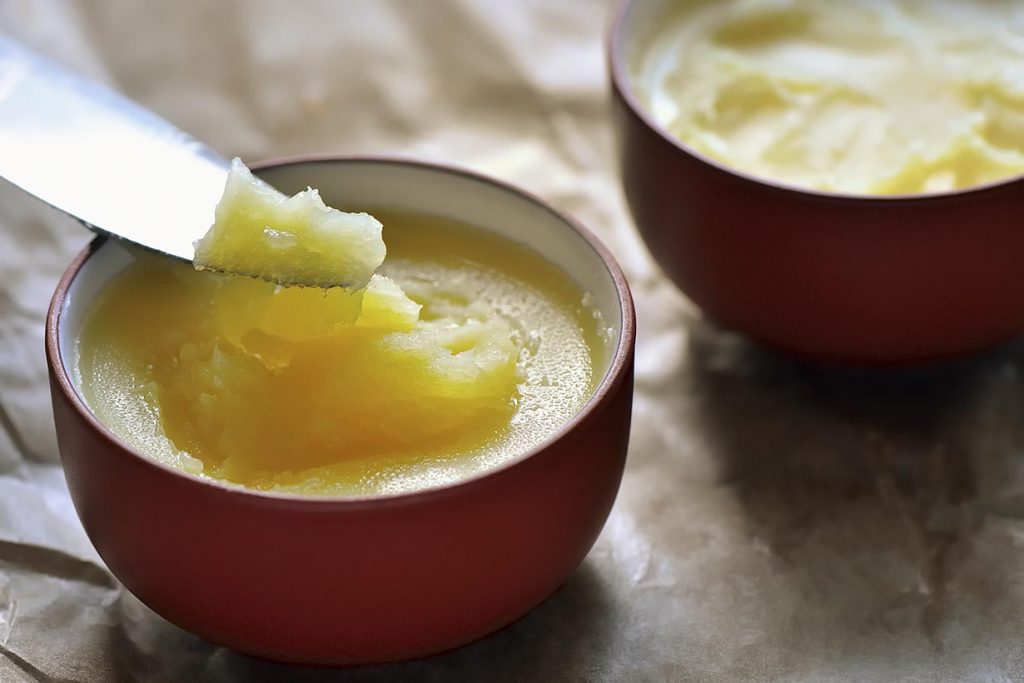
The most significant difference between ghee and butter is that ghee is 100% pure butterfat.
To make ghee, butter is heated until the water content evaporates, which reduces the water content and also causes the lactose (milk sugar), whey and casein (proteins) to separate. These milk solids are then skimmed out of the milkfat.
Once the heating process is over, only the pure butterfat, which is known as ghee, is left.
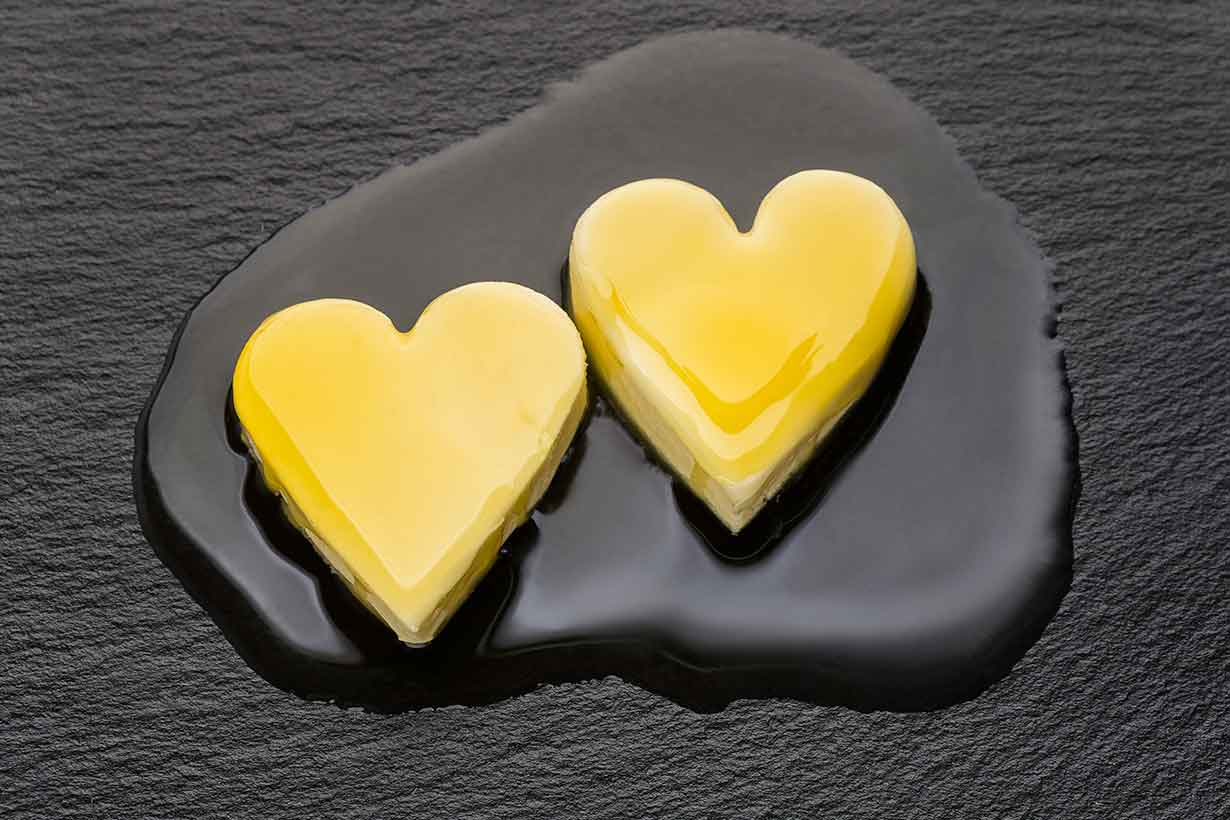
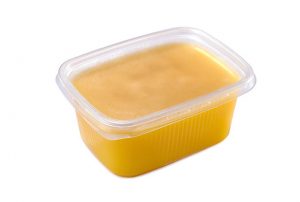
Ghee has a deep yellow color and typically looks like this:
See this comprehensive guide to ghee for more information.
Nutritional Comparison
Using USDA data for a 14g tablespoon of ghee and a 14g tablespoon of butter, the following table shows how the calorie and macronutrient composition of ghee and butter compare.
So that we can compare ghee and butter like-for-like, the nutritional data for butter uses a ‘without salt’ product.
| Nutrient | Ghee (% DV) | Butter (% DV) |
|---|---|---|
| Calories | 123 kcal | 102 kcal |
| Carbohydrate | 0g | 0.01g |
| Fat | 13.9g | 11.5g |
| Saturated fat | 8.67g | 7.17g |
| Monounsaturated fat | 4.02g | 3.32g |
| Polyunsaturated fat | 0.52g | 0.43g |
| Protein | 0.04g | 0.12g |
| Cholesterol | 35.8 mg | 30.5 mg |
| Sodium | 0.28 mg | 1.56 mg |
| % Water content | 0.2% | 16% |
As the table shows, ghee has a lower water, carbohydrate, and protein content than butter.
Ghee is primarily just butterfat, and since fat is the highest-calorie macronutrient (9 calories per gram), ghee contains more calories than butter.
Both ghee and butter contain high amounts of saturated fat, which can lead to elevated “bad” LDL cholesterol when consumed in high amounts.
The vitamin and mineral profiles of ghee and butter are very similar, with both containing small amounts of vitamins A, E, and K per serving.
Since each of these nutrients is fat-soluble (they are stored in fat) ghee has slightly higher concentrations due to its higher fat content.
Smoke Point
Since ghee doesn’t contain the milk solids lactose and casein like butter do, it has different smoke point properties.
The reason for this is because fat breaks down at higher temperatures than proteins and sugars, giving ghee a higher smoke point than butter:
- Butter: The Kendall Reagan Nutrition Center at Colorado State University note that butter has a smoke point of 176°C (350°F).
- Ghee: According to a 2024 study, ghee has a smoke point of 250°C (482°F)
As a result, ghee is a better option than butter for high-heat cooking methods like searing and deep-frying.
Nutritionist’s Take: Smoke Point
So, ghee has a higher smoke point than butter – you might be wondering what does that mean for you?
If you’re just using butter or ghee in dishes (like curries) or adding it to vegetables, then the smoke point isn’t worth worrying about. I certainly wouldn’t. On the other hand, if you are sauteing vegetables or meat at a high temperature, there are several things you may notice:
- Burning and smoke: Butter will start to burn faster due to its sugar and protein content, and you’ll see smoke start to form if you aren’t careful at higher temperatures. Note: use butter at a lower heat and you can still cook without burning it.
- Browning: You might see butter start to brown when cooking at moderate to high heat. This is due to the proteins and sugars within butter burning. In contrast, ghee remains stable and has no color changes from heating.
- Evaporation: The water content of butter can evaporate during cooking – it’s actually part of the process to make ghee from butter in the first place.
Lactose Intolerance and Milk Allergies
Lactose Intolerance
Lactose intolerance is a global issue estimated to impact 65–70% of the population.
Lactose is a dairy sugar found in foods like milk and cheese, but how do butter and ghee compare for lactose content?
- Butter: Since it is mainly fat, butter has only a small amount of lactose compared to milk. However, it could potentially contain enough lactose to trigger symptoms in highly sensitive individuals.
- Ghee: The process involved in making ghee removes almost all the lactose, leaving only trace amounts.
- Lactose content: According to a 2015 analysis involving 12 samples, butter contained around 0.69 grams of lactose per 100g. For ghee, all samples contained less than 0.03 grams of lactose per 100g.
For individuals with lactose intolerance, ghee is therefore a better option than butter due to its significantly lower lactose content. However, individuals with lactose intolerance should first consult their healthcare provider if considering ghee.
Milk Allergy
Both ghee and butter contain trace amounts of the milk proteins casein and whey.
Since even trace amounts of milk proteins can trigger milk allergies, neither product is safe for people with a true milk allergy.
Public health guidance advises that neither ghee or butter are suitable for a milk allergy diet.
Taste
While both ghee and butter are similar in flavor, they have a different texture due to their contrasting ratios of milk solids and butterfat.
Their taste differences are also influenced by the following factors:
- Lactose: Due to its lactose content, butter has a slightly sweeter and creamier taste.
- Fat composition: As a 100% pure fat, ghee has a smoother and more oily mouthfeel.
- The maillard reaction: During the production of ghee the maillard reaction occurs between milk sugars and proteins. If you haven’t heard of the maillard reaction before, then it’s the same process that browns a slice of toast. It gives the ghee nutty flavor notes. The flavor from this remains even after the proteins and sugars have been removed.
Storage
Ghee has a storage advantage over butter because it’s more shelf-stable and less prone to spoilage:
- Butter: Ideally butter should be kept in the refrigerator as it typically lasts only a few weeks at room temperature.
- Ghee: With almost no water, sugar, or protein content ghee is significantly less prone to spoilage. It doesn’t have to be kept in the refrigerator.
The longer storage potential of ghee may be appealing to some people, particularly as refrigerated butter is solid and much harder to spread.
Price
As with anything, price is an important consideration.
On this note, butter is more budget-friendly than ghee, typically costs 2–3 times less for a similar-sized product.
The added expense of ghee may make butter a more appealing choice for many people, especially since they are quite similar products.
Potential Health Effects
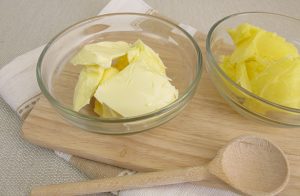
Now that we know the major differences in terms of their characteristics and nutritional properties, let’s look at how butter and ghee may affect our health.
Oxidative Stability
Oxidative stability refers to how stable a cooking fat is when exposed to heat, light, and oxygen.
Fats with poor stability can break down during the cooking process, forming oxidation products that may potentially have adverse health effects.
Although unsaturated vegetable oils are the most prone to oxidation, saturated fats like ghee and butter can still start to break down – even though they are typically more stable.
But how do the two compare? A 2021 study actually compared the oxidative stability of ghee and butter during storage. While the researchers didn’t actually heat the products, they stored them for 12 months and found:
- Induction period: Ghee had a longer induction period than butter. The ‘induction period’ means how long the fat remains relatively stable before it starts to clearly break down and oxidize.
- Antioxidant protection: Adding plant extracts (such as ginger rhizome) to the fats increased their induction period. This is because these extracts have antioxidant properties, helping to protect against and delay oxidation.
Based on this as well as the respective characteristics of the two fats, we can conclude that ghee likely has better oxidative stability than butter.
Ghee, Butter, and Heart Health
Firstly, it is important to point out that two forms of ghee exist: traditional ghee made from butter, and vegetable ghee:
- Traditional ghee: Made from butter, traditional ghee is pure butterfat and contains small amounts of fat-soluble vitamins, such as vitamins E and K.
- Vegetable ghee: Vegetable ghee is made from vegetable oils, but the most famous variety historically (known as vanaspati) contained significant amounts of trans fats. Trans fats are known for their strong association with increased heart disease and mortality risk. It is possible that some varieties of vegetable ghee may still contain trans fats, particularly in regions without strict regulations on trans fats.
It is worth being aware of this since some commentaries on ghee may base their findings on historical data that used trans-fat-containing vegetable ghee rather than traditional ghee.
Ghee and Butter’s Impact on Cholesterol
A high intake of saturated fat can lead to elevations in “bad” LDL cholesterol, which is associated with an increased risk of cardiovascular disease.
Ghee contains a similar (but slightly higher) saturated fat content than butter, but what does science have to say on their respective impact on blood lipids, otherwise known as cholesterol?
While there is a lack of research directly comparing the two, here are some findings from relevant studies:
- A 2021 randomized controlled trial (RCT) found that ghee increased apolipoprotein B (apoB) levels compared to olive oil. ApoB is a type of protein found in atherogenic (sometimes called “artery-clogging”) particles like LDL and VLDL. High ApoB levels are thought to be a causal risk factor for heart disease.
- A 2025 randomized crossover pilot study compared the effect of olive oil and butter on cardiovascular risk markers. Compared to extra virgin olive oil, butter increased LDL-C and total cholesterol.
- A 2016 animal study involving rats found that both ghee and butter raised LDL-C and total cholesterol. However, rats fed butter had a more significant rise in triglycerides and VLDL (very low-density lipoprotein). Both triglycerides and VLDL are associated with an increased risk of cardiovascular disease.
Nutritionist’s Take: Butter and Ghee’s Lipid Impact
From the above studies, the main takeaway is that both ghee and butter raised markers of cardiovascular risk compared to olive oil. These findings support broader research on the relative impacts of saturated fat and monounsaturated fat (the main fat in olive oil) on the cholesterol profile.
While the findings from the rat study are interesting, I must mention that animal studies are typically classed as weak evidence in nutritional science. We cannot use them to imply the same effects would occur in humans.
Nutritionist’s Summary: Ghee vs. Butter
As you may have gathered throughout this article, butter and ghee are relatively similar in their nutrient content and potential effects.
They are primarily a source of saturated fat and contain a small amount of fat-soluble vitamins.
Based on this, to determine which is the “better option” we have to consider which of these two dairy fats suit our personal preferences and intended usage.
- Expense: If the price point is important to you (which it understandably is to many people – including me) then butter is the budget-friendly winner.
- High-heat cooking: If you must use either butter or ghee, then ghee exhibits higher tolerance to high heat temperatures. It is less likely to burn due to its lack of milk solids.
- Impact on cholesterol: Since both ghee and butter likely raise LDL cholesterol levels, opting for a different cooking oil would be the better option for individuals trying to limit saturated fat. Unsaturated oils like olive oil, canola oil, and soybean oil are thought to lower LDL compared to saturated fats.